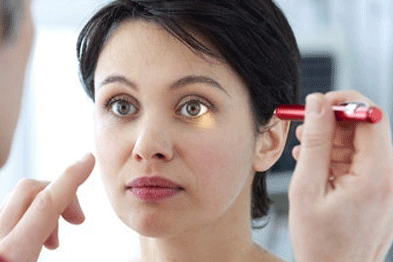
The mental status exam, is an assessment tool that helps identify psychological symptoms that may assist the practitioner determine if there is a psychogenic problem. When assessing mental status, it is important to adjust questions and categories to avoid age and/or cultural bias.
Category Description Appearance General appearance, grooming and gait. This is best observed as the client comes into the room. Grooming is one of the earliest areas to deteriorate when mental function has diminished. Behavior Speech, eye contact, body language, response to the environment. Observe for appropriate use of personal space. Does the person come right into your face, or stand an unusual distance away. Insight The ability of the client to be aware of one’s own abilities. The ability to analyze a problem objectively. Ask the client to explain a problem. Intellectual Functioning Simple calculations, ability to abstract or think symbolically and categories of association. This is done through direct questioning using math, proverbs or analogy. Judgment Assesses decision-making abilities. Ask client What he would do in a dilemma regarding an important decision. Memory Immediate recall, recent memory, remote memory. Ask the client about a recent current event that both you and the client should know. Ask about some event in the past that should be known by both. Be very careful in this area to avoid cultural bias. Mood and Affect Mood relates to the emotions of the moment while affects refers to the range of emotions displayed such as happy, sad, or unchanging. Compare in relation the client’s probable everyday behavior. Orientation Assess for awareness of person, time, place, and purpose. Perceptual Processes Awareness of self and one’s thoughts, reality and fantasy. Ask about delusions, illusions and hallucinations. Do not hesitate do ask direct questions. Sensorium Ability to concentrate, perception of stimuli. Thought Contents This assesses themes in conversation and is assessed by observing what the client discusses spontaneously in conversation. Thought Processes This measures a stream of conscious or mental activity as indicated in speech. Observe for rate, flow, and ability to pursue a topic logically.
www.accessce.com